
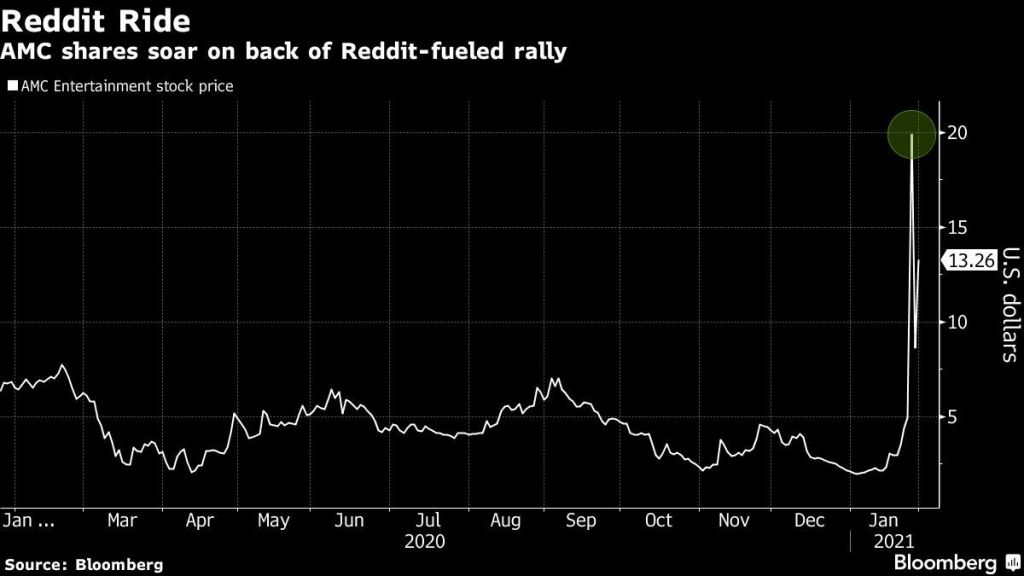
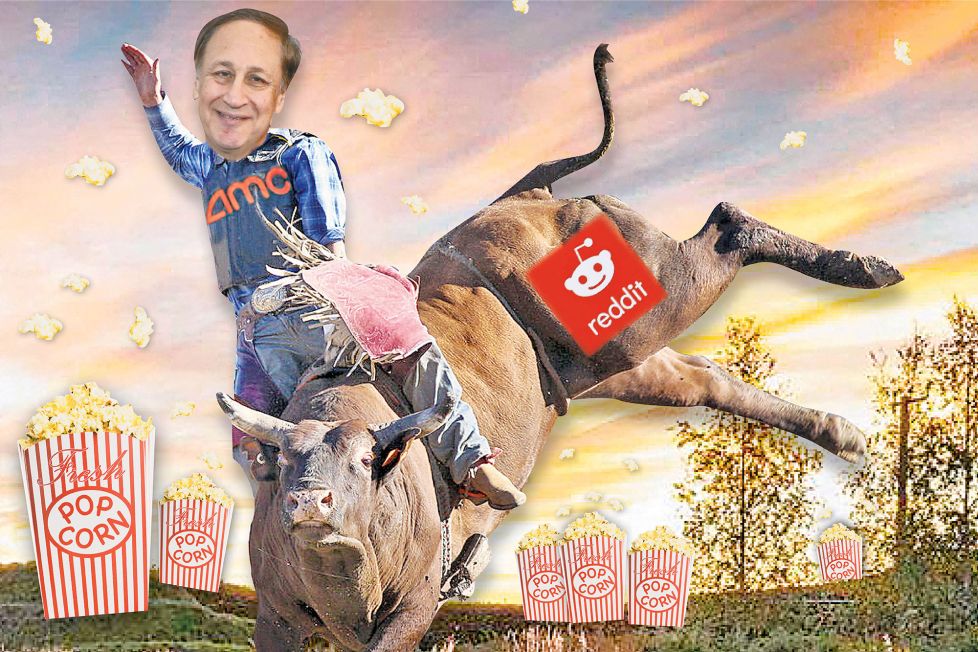
Despite the country still seeing high number of Covid-19 cases, deaths, economic troubles, one of the biggest stories that took the Internet and the world by storm was the Reddit-fueled mania. Without going super deep into all financial jargon, stocks like GameStop (GME), AMC Entertainment (AMC), and a couple of other ones like Nokia, BlackBerry, etc. saw a huge surge in their stock prices, primarily due to the actions of retail investors and short-squeezes by hedge funds, before tumbling down again… Because this is an entertainment-centric blog, I will mostly focus on the ramifications on AMC and whether the company is now out of any financial trouble.
Before this Reddit madness, AMC was in a really precarious financial position, as I elaborated in my previous article. The company saw a huge decline in revenues in 2020 and was expected to run out of cash by mid-January. Not to mention, the company was saddled with billions of dollars of debt and was on the precipice of (Chapter 11) bankruptcy. Because of the pandemic, the company had a cash burn rate of $125 million and based off the Q3 2020 earnings, the company reported having roughly $400 million in cash & cash equivalents. Despite the vaccine rollout, situation got much worse for AMC because film studios started delaying their blockbusters like No Time To Die or Morbius to the later half of 2020 or even 2021. At this point, it was all but likely that AMC would fall, which is exactly what the short sellers were banking on…
Note: In the next paragraph, I delve a little deeper into short selling and what led to AMC’s shares skyrocketing… Because this is a pretty complicated subject, I promise to keep it as simple as possible.
In case you’re still confused about short selling (even after watching The Big Short dozens of times), here’s a good summary of what it is – Let’s say Person A believes that a company’s stock price will fall. Thus, Person A “borrows” a stock from Person B and immediately sells it to Person C at the market price (let’s say $10). Now, Person A just waits… If the stock price of the company drops to $5, Person A buys the stock at that $5 market price and “returns” it to Person B, therefore pocketing that $5 profit. Now, if the stock price increases to $15 rather than dropping, Person A is forced to buy it at the $15 market price, thus losing $5. Relatively safe, right? Nope… Short selling is extremely risky and the potential downside is almost infinite. If the stock price increases to $30 or $100 or even $400 (in the case of GME), Person A HAS to buy it back at that market price. Meaning, he’s potentially facing a $390 loss if the price skyrocketed to $400. Because of AMC’s financial position and the repeated movie delays, many large institutional investors and hedge funds started shorting the stock en masse and were counting on the company going under. In fact, at one point, there were more AMC shorts than all the shares outstanding, which is actually possible. Retail investors, like you and me, noticed the crazy amount of short interest and because these companies’ stock prices were super cheap, these individual investors started buying it. As the share prices started to rise, some short sellers were forced to cover their losses and had to buy it back at that market price. This created something called as a “short squeeze”, which was responsible for Game Stock and AMC “going to “the moon.” Logically speaking, as more institutional and hedge fund investors started to cover their losses, the price of the stock rose even more. Essentially, the more the stock price rose, the more short sellers covered their losses, which only drove the price higher and higher. This is what led to stocks like GameStock and AMC increasing 100’s of percent, which led many brokerages to halt trading for such stocks… That’s a separate story all together.
Just before the Reddit-mania, AMC started raising capital from various places. First, the company raised $204 million in December, and in early January, it raised over $713 million. For the most part, the company raised capital by issuing more common shares, which is both good and bad for the existing shareholders. By raising money through equity, shareholders might feel a sense of relief as their investment is less likely to go under. On the other hand, increasing the number of shares also dilutes the holdings of existing shareholders. More on stock dilution later… According to insiders, “the company during the summer restructured its balance sheet to wipe out more than $500 million in debt and has negotiated with landlords on its rent payments throughout the crisis.”
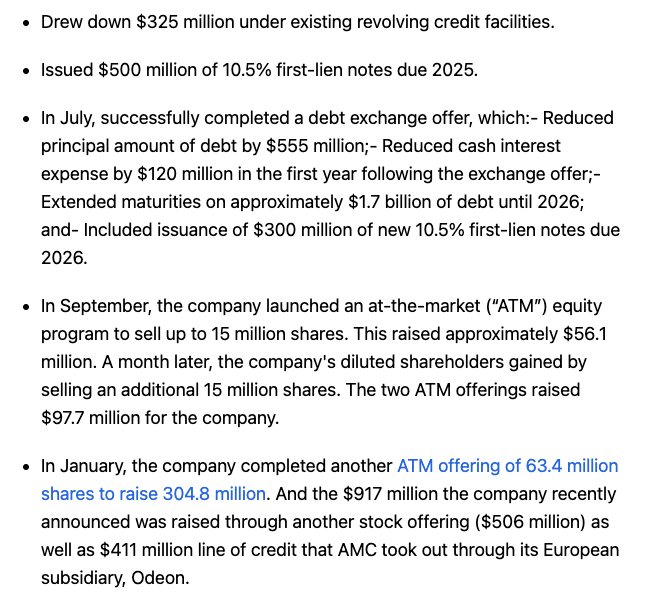
However, the Reddit-mania helped AMC further reduce his debt load while simultaneously shoring up its cash reserves. Apparently, Silver Lake, one of AMC’s lenders, “converted $600 million in AMC debt into equity”, who then sold their shares at the high market price. Meaning, AMC effectively shaved off $600 million of its debt. In addition, AMC has since issued new shares multiple times since the rally, which has led it to raise over $300 million on top of the $900+ million before the Reddit-mania. Meaning, AMC now has enough capital to last well into 2021. Thanks to our friends at Reddit’s wallstreetbets, AMC has also wiped “out all of last year’s pandemic losses.” However, analysts also warn that AMC has now diluted equity shareholders “by roughly 75%” and if situation doesn’t improve by summer/early-fall, we’re likely to see a repeat of bankruptcy talks. Fortunately, the Biden administration is playing a bigger role in vaccine rollout than the previous administration and as more companies like J&J and Sanofi report positive vaccine data, we could start seeing things normalize by the summer. Meaning, we could once again return to the multiplexes and watch a movie the way it was intended to be seen – on the big screen!
 Naman's Movie reviews