AT&T’s WarnerMedia + Discovery Merger – Does it make sense?

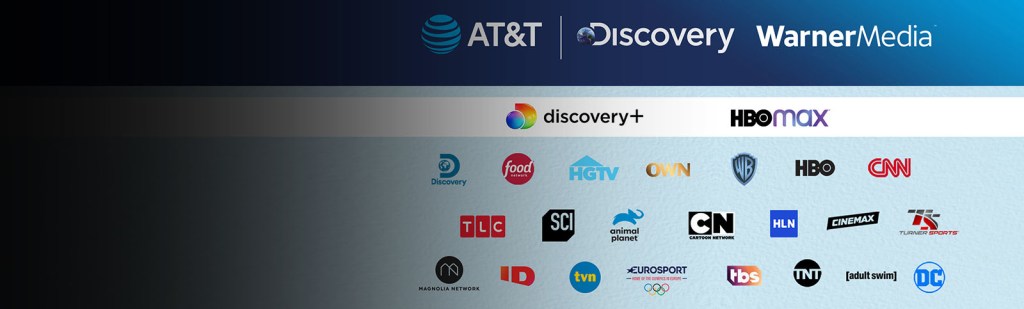
In 2018, AT&T’s (T) acquisition of Time Warner was finally approved by various governmental agencies for a whopping sum of $85.4 billion. Essentially, AT&T wanted to use its wireless and broadband services to deliver high-quality content (Time Warner-owned CNN, TNT, WB’s film & TV slate, HBO, etc.) to its consumers. 3 years later, however, AT&T is now planning to sell its entire WarnerMedia division to Discovery for a sum of $43 billion, through “a combination of cash, debt securities, and WarnerMedia’s retention of certain debt.” The deal would merge WarnerMedia and Discovery’s streaming services, making the ‘merged’ company worth roughly $150 billion, including debt. In addition, AT&T shareholders would receive a 71% stake in the new company while Discovery shareholders would receive a 29% stake.
Courtesy of Variety

That said, the question becomes – Why is AT&T selling WarnerMedia for a loss of $42.4 billion? After all, WarnerMedia has a plethora of lucrative assets, from its news division (CNN) to WB’s film & TV franchises like DC Comics, Harry Potter, etc. On paper, the idea of a cable and wireless company like AT&T leveraging its broadband services to serve customers with media content makes sense. In reality, however, the acquisition has been a disaster for AT&T and its shareholders, while also stretching its resources thin. Even Wall Street was against this deal, with the company seeing its stock price drop more than 20% since 2018.

Thanks to its pricey acquisitions of DirecTv for $48 billion or 67.1 billion with debt, and aforementioned Time Warner for $85.4 billion, AT&T has become saddled with over $180 billion in short-term and long-term debt, making it one of the most indebted companies in the world. In a crowded wireless space, which is its core business after all, AT&T is in need of a lot of capital to expand its current 5G infrastructure to compete against companies like Verizon (VZ), Comcast (CMCSA), and T-Mobile/Sprint (TMUS). A few months ago, the Federal Communications Commissions (FCC) held a massive 5G airwave auction, where Verizon, AT&T, and T-Mobile spent over $45.4 billion, $23.4 billion, and $9.3 billion respectively to acquire “C-band spectrum.” Without going on a tangent about the auction itself and the 5G and broadband network, the fact of the matter is that it is very expensive to upgrade the current infrastructure to deliver a high-speed 5G connection. In fact, AT&T ended up further increasing its debt-load by borrowing $14 billion to pay for the auction, which is becoming very unsustainable. AT&T is essentially fighting behemoths on multiple fronts (in telecommunication and in entertainment) with very limited capital and is trailing in both. As Ron Swanson famously said, “Never half-ass two things”…

Speaking of, while half of the company’s focus was on 5G infrastructure, the other half was set on rolling out the company’s flagship streaming service, HBO Max, in the hopes of taking on Netflix, Disney, Amazon, etc. Despite spending billions of dollars on original content for both HBO and HBO Max, the results have been disappointing, to say the least. By the way, I do have to express my befuddlement at the marketing of HBO Max, as the company failed to effectively distinguish between its 4 services – HBO, HBO Go, HBO Now, and HBO Max. As someone who follows the entertainment and business world closely, even I was confused at the difference between the aforementioned services… Apologize for the tangent but, this marketing blunder proved to me why a merger & acquisition (M&A) of companies in 2 completely different industries is not a good idea. Okay, back to subscriber growth, or lack thereof in the case of HBO Max. In terms of subscribers, AT&T reported that HBO & HBO Max added roughly 2.7 million subscribers domestically in the last quarter, with a current tally of just 44.1 millions HBO and HBO Max subscribers domestically and roughly 64 million subscribers globally. The bump in new subscriptions was much lower than expected, despite having HBO Max-exclusive releases like Zack Snyder’s Justice League and day-and-date releases for big movies like Godzilla vs. Kong, Mortal Kombat, Wonder Woman 1984, etc.. On the other hand, many streaming services reported solid subscriber growth while not having to raise their subscription cost a whole lot. Here is the subscriber number for the other streaming services – Netflix (NFLX) currently has over 207 million subscribers, Disney (DIS) currently has roughly 160 million subscribers (Disney+ has 103.6 million subscribers, Hulu has 41.6 million subscribers and ESPN+ has 13.8 million subscribers), Amazon (AMZN) Prime currently has over 200 million subscribers, Comcast’s Peacock currently has over 42 million subscribers, Discovery+ has over 15 million subscribers, ViacomCBS’s Paramount+ currently has over 30 million subscribers, and Apple+ *is estimated* to have roughly 40 million subscribers based on third-party data. The competition is clearly heating up in the streaming service space and ultimately, consumers will only have the money to sign up for a couple of services, which has arguably left some services in the dust already (ie. Quibi). By merging WarnerMedia and Discovery, HBO Max and Discovery can offer more content for a reasonably priced subscription cost between $7/month and $15/month, making it a better bargain for the consumer. Considering Discovery+ is best known for its educational content (Discovery Channel, Animal Planet, etc.), and HBO Max is best known for its adult-oriented fictional content, an amalgamation of the 2 would have a four-quadrant appeal and would most definitely help expand its viewer base.

By merging the 2 entertainment companies, who have a similar entertainment-oriented vision anyways, the end result would be better for the consumer, while also allowing AT&T to use the $43 billion to focus on its core business of 5G network and fiber network expansion.

Why movie studios should NOT buy theatre chains

Because of the Covid-19 pandemic’s impact on the entertainment industry, one question that has repeatedly come up is “Why don’t movie studios buy theatre chains like AMC or Cinemark or Cineworld (which owns Regal), etc.?” After all, the exhibition industry has seen a huge drop in their share prices & market value, which could potentially be a steal for a major movie studio. In addition, the Trump administration recently abolished the Paramount Decrees, which prevented movie studios from buying theatre chains in the past. Now that the Paramount Decrees have ended, studios are legally allowed to own and operate movie theatres, albeit after a short 2-year “sunset period”. So, why haven’t we heard reports of one of the major studios (Disney, WB, Universal, Sony, Paramount) or even one of the streaming giants (Amazon, Apple, Netflix) lining up to own movie theatres? Well, there are a few reasons…

Even though such a vertical integration idea might sound good on the surface, in reality, it would be a poor financial decision for movie studios to make. Because of declining ticket sales, coupled with lackluster financials for movie theatres and a big emphasis on streaming, studios should not open up their wallets to buy movie theatres.

Declining Domestic Ticket Sales

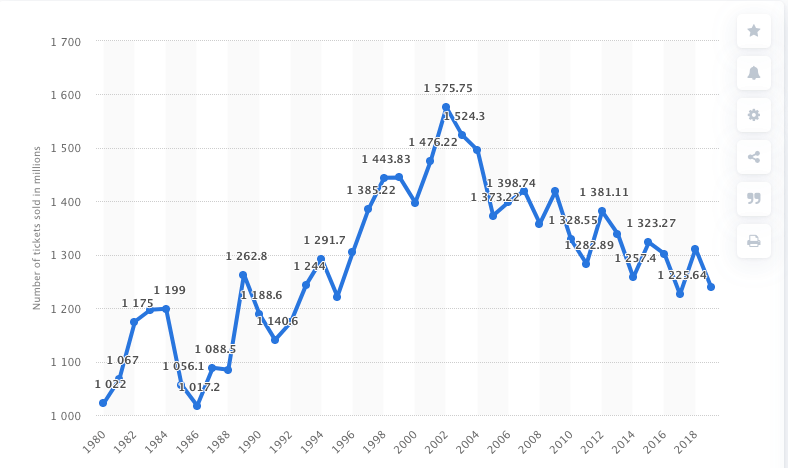
For starters, domestic ticket sales have been declining for years now. Even though 2019 was a record-breaking year for Hollywood with over $42.5 billion in sales, actual tickets sold were far lower from their early-2000 highs, as seen below.

In 2019, 1.244 billion tickets were sold, a drop from 1.301 billion tickets sold in 2018, which is already much lower from 1.575 billion tickets sold in 2002. The only reason 2019 was a record-breaking year, in terms of revenue, is because the average ticket price increased by 36 cents to $9.37. As ticket prices keep rising, fewer people go to the movie theatre, which compel exhibitors to further raise ticket prices to offset the losses. Thanks to burgeoning ticket prices and plethora of other entertainment options like streaming, video games, etc., the average person now only goes to the movie theatre a couple of times a year, primarily for big tentpole films like an ‘Avengers’ or ‘Star Wars.’ In 2019, more than 1/4th of the worldwide box office total came from just 10 movies. The fact of the matter is that people don’t go to the theatre anymore to see smaller films like ‘Doctor Sleep’ or ‘The Lighthouse’, something they routinely did in the past.

Financials

Looking at the financials of AMC, Cinemark, and Cineworld, it is clear that the industry does not have a *high* profit margin. Based on the company’s reported income statements –

Cinemark’s annual net income was: $216 million in 2015, $254 million in 2016, $263 million in 2017, $213 million in 2018, $190 million in 2019.

AMC’s net income was $104 million in 2015, $112 million in 2016, net loss of $487 million in 2017, $110 million in 2018, and a net loss of $149 million in 2019.

Cineworld’s net income was $75 million in 2015, $82 million in 2016, $101 million in 2017, $213 million in 2018, and $141 million in 2019.

While Cinemark and Cineworld have performed considerably better than AMC, at least when it comes to net income, all 3 major theatre chains have billions of dollars in debt (both short-term & long-term).

Not to mention, owning and operating movie theatre is an extremely expensive endeavor. Movie theatres have high overheard fixed costs and because of the pandemic & the resulting lockdowns, they’ve burned through 100’s of millions of dollars of cash every quarter. AMC, the largest theatre chain in the world, recently issued a dire warning, stating that it was going to run out of cash by January. If a studio were to acquire one of these chains, especially AMC, they’d also have to assume all the debt. The 2 biggest movie studios, Disney & AT&T-owned WB, are already riddled with billions of dollars of debt from their recent acquisitions. In 2019, Disney shelled out $71.3 billion to buy 20th Century Fox’s assets, while AT&T purchased DirectTV for $67 billion (including debt) and Time Warner for $85 billion in 2015 and 2018 respectively. An argument could be made, however, for a streaming company to buy movie theatres. As I detailed in my last article, however, Netflix is already $17+ billion in debt, so they are pretty much in no position to run movie theatres & assume all the debt. On the other hand, Amazon ($1.5+ trillion market cap as of this writing) and Apple ($2.2+ trillion market cap as of this writing) have billions of dollars in cash and could potentially acquire movie theatre chains. Even though paying a few billion dollars to acquire one of the 3 big chains is chump change for the likes of Amazon or Apple, both are already investing heavily on their streaming platforms and more importantly, are facing anti-trust lawsuits. It’s safe to say that the last thing either of the 2 tech giants needs is more government scrutiny over its alleged monopolistic business practices.

Streaming

As alluded to before, the industry, as a whole, is transitioning more towards streaming. Today, consumers have over 8 major streaming services, with tons of content to watch from the comfort of their homes. With high-quality, cinematic-level shows produced like ‘The Mandalorian’ or ‘Game of Thrones’ on TV, coupled with all the upcoming ‘Marvel Studios’, ‘Star Wars’ and ‘Lord of the Rings’ shows coming on streaming platforms, many consumers feel like they’re already getting their money’s worth on streaming without having to spend $15 to watch a VFX-heavy movie in a theatre. For less than $15 a month, consumers get access to 1000’s of classic & original TV shows and movies, which is a better deal for an individual.

In addition to all the classic content, consumers also get new movies on the streaming platforms, including films like Wonder Woman 1984 or Soul or Mulan, etc. Recently, WB dropped a bombshell on the industry, announcing that it will have a simultaneous release strategy for its entire 2021 film slate. Meaning, you will be able to watch films like Kong v. Godzilla, The Suicide Squad, Dune in theatres AND on HBO Max on the same day. In the past, studios and exhibitors had a 3-month theatrical window, which meant that studios couldn’t release their movies on Video On Demand (VOD) or on streaming within that 3-month window. If more studios make similar moves, it’ll render movie theatres useless.

I genuinely hope I’m wrong and will happily eat crow if movie theatres come back stronger than ever, once vaccines are rolled out to the masses. If AMC is unable to raise more money through stock issuance or debt and does end up declaring (Chapter 11) bankruptcy in the next few weeks, which is likely, I hope they are able to successfully reorganize their debts and get back in the business. I cherish the theatrical, moviegoing experience and would like nothing more than to go back to the movies again. Yes, there is also an argument to be made that studios need theatres for their movies to make billions of dollars, which is simply not possible on a streaming service. An ‘Avengers: Endgame’ isn’t going to make $2.8 billion on a streaming service or on VOD. However, the costs of buying and operating movie theatres are far greater than the returns and based on the current trajectory, I suspect that going to the movie theatre might eventually become a relic of the past, with a very niche audience.

Conclusion

As I laid out above, I don’t think it would be prudent for movie studios to own and operate movie theatres. Fewer people were going to the movie theatres today than before, even before Covid-19 wreaked havoc on the exhibition industry. With a razor-thin profit margin & a shifting entertainment landscape to streaming, it simply does not make (financial) sense for a movie studio or a streaming platform to spend billions to acquire movie theatre chains.

3 ways to improve Netflix

In the last earnings call, Netflix executives warned investors that the company expects its future subscriber growth to drop, especially as “Covid and social restrictions end.” Not to mention, more streaming services have joined the fray, meaning Netflix now faces significantly higher competition than ever before, which has prompted the company to double down on their original content. In 2020, Netflix planned to spend “$17.3 billion” on their original content, “a $2 billion increase from 2019.” Spending such exorbitant amounts of money requires the ability to raise capital and rather than raising money through equity (offering more stocks), Netflix decided to borrow money. Currently, the streaming giant has $726 million in short-term debt and a whopping $17 billion in long-term debt. Their debt-to-asset ratio, which indicates the percentage of assets financed by (short-term and long-term) debts is at a staggering 47%. Their debt-to-equity ratio, which is measured by dividing the total liabilities by the shareholders’ equity, is at 298%! Generally speaking, a lower debt-to-asset ratio and debt-to-equity ratio is better because it involves less risk. Even though this isn’t as big of a problem right now, Netflix absolutely needs to take this into consideration for their overall streaming strategy.

That being said, I believe that Netflix can do 3 things to alleviate some of the inevitable financial stress and further solidify its #1 ranking in the streaming arena.

Marketing / Quality vs Quantity

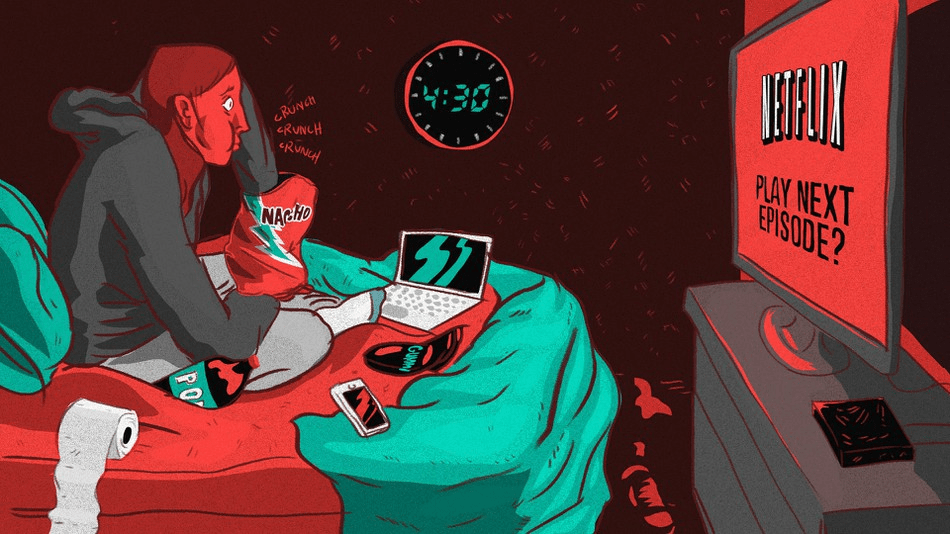
One of Netflix’s defining ‘qualities’ is that it releases all of its episodes at once, as opposed to dropping it weekly like traditional cable or other streaming services. Say what you will about HBO Max’s launch, there’s no denying that HBO is easily the best streaming service, in terms of quality. In the last number of years, HBO Originals have repeatedly swept the Emmy’s and generally receive better critical reception than their rivals. Netflix’s strategy, on the other hand, is to completely bombard its subscribers with so much content, often times lackluster, that they completely forget to even market them. In the last 2 months, we’ve had big Netflix original shows like Lucifer Season 5, Ratched Season 1, Umbrella Academy S2, Away S1, etc. In terms of original movies, Netflix recently gave us Enola Holmes, Project Power, The Devil All The Time, etc. However, do you still hear anyone talking about these shows/movies? Or even better (or worse), did you first hear about these shows through marketing or by aimlessly scrolling through Netflix? Chances are, it’s the latter. It’s fair to say that Netflix is absolutely abysmal at marketing its content and one reason for this is because they have TOO MUCH content. Unlike an HBO or Disney+ or even an Apple+ that is focused on putting out quality content and marketing their content to get the maximum eyeballs, Netflix has chosen to just drown its viewers with content and simply doesn’t have as much money allocated to promote them. This also explains why Netflix has been known to ending popular shows after a couple of seasons. Just recently, Netflix cancelled Glow, The Chilling Adventures of Sabrina, Altered Carbon, etc. If people don’t know that there’s a new season coming out, how does Netflix expect them to watch it? Frankly, I do not get the rationale to greenlight a gazillion shows if Netflix isn’t going to take the time to even market them properly… @Netflix, focus on promoting the content and spend more time on the quality of the content itself!!

PS – This SNL skit perfectly sums up Netflix’s current strategy

Courtesy of The New York Times

Introduce a free, ad-supported tier

This is a no-brainer. One way Netflix can see a big boost in their subscriber count is by releasing a free but ad-supported tier, similar to NBCUniversal’s Peacock. Of course, they can choose to offer limited content on this particular tier and drop weekly episodes as opposed to dropping them all-at-once if need be, but the strategy is quite sound. This will most definitely help them see a boost in the number of subscribers AND more importantly, allow them to recoup some of the expenses through advertisements, as one Steve Burke, a former NBCUniversal executive explains for Peacock. According to Burke, “Former NBCUniversal Chairman Steve Burke said last year he expects Peacock can make about $5 per month for every free Peacock subscriber in advertising revenue.” If Netflix were to offer a free tier, a lot of previous Netflix users will undoubtedly come back to the service, simply due to the amount of (four-quadrant) content available on the platform. Currently, the cheapest Netflix plan is $9/month, higher than Disney+, Apple+, and Peacock. However, Netflix is obviously the biggest streaming platform in the world and will likely be able to demand significantly higher in advertising fees than a newbie like Peacock. As more people “subscribe” to Netflix, the company will have higher leverage, which will likely translate to more revenue for the company. That being said, there is a risk of losing current, paying subscribers to the free tier instead. However, Netflix can entice these customers to stick to the paid plans by offering more content, especially in HD or 4K, allowing users to download and watch movies offline, etc. These are the benefits that the free tier won’t have, for obvious reasons. Besides, the “turnover” rate and “revenue lost” will be minuscule to the advertising revenue generated from the free tier.

Release weekly episodes

This is likely to be the most controversial suggestion but based purely on the research and data, I believe Netflix (and us, the viewers) will most definitely benefit from this strategy. For starters, releasing weekly episodes has shown to generate more buzz, translating to higher viewership, than Netflix’s drop-it-all-at-once strategy. Recently, Amazon switched their prior model and decided to drop weekly episodes of The Boys season 2, as opposed to dropping them all at once for Season 1. The result? Double the viewership. How about The Mandalorian or Game of Thrones? These shows wouldn’t have been anywhere as big as they are/were if studios dropped the entire season at once. Releasing one episode a week gives viewers the time to speculate and buzz about the show for an entire week! By dropping weekly episodes, the buzz only goes up and if the shows are any good, more people join the ‘bandwagon’ because of the word-of-the-mouth. As we all know, people like being a part of the cultural zeitgeist and releasing weekly episodes makes the show feel like an “event.” As I alluded to before, there is very little buzz, if any, for a Netflix show after a week or 2 of its release. This is also true for high-profile Netflix shows like Stranger Things, The Witcher, Daredevil, etc. Once people watch the entire season, the buzz dissipates and viewers naturally move on to other shows. As we’ve seen from HBO or Disney+ shows, subscribers will continue to pay if they like a particular show. Another benefit of weekly episodes is that Netflix will then no longer need to spend billions of dollars on shows that would likely have been ignored anyways.

Courtesy of RLC Media

As I mentioned before, releasing weekly episodes is also good for the viewers. There have been detailed studies on the negative impact of binge-watching on one’s health, but my argument will solely be based on the ‘cultural’ impact. When Netflix dumps the entire season at once, interested viewers are compelled to binge the show to avoid spoilers. Often times, that’s 10+ hours of time commitment in one weekend, which a lot of people are unable to commit to for a plethora of reasons. If no one talks about the show after a week, viewers might be inclined to skip the show all together, which explains why a majority of Netflix shows don’t gain significant viewership. People want to be a part of the conversation!

Look, I totally understand that this suggestion is very disruptive and if enacted, will anger a lot of current subscribers. However, the company can always find a “middle-ground” of sorts. For certain low-profile shows like Ratched, Glow, etc., it’s perfectly fine if Netflix chooses to dump the entire season at once to satiate the appetite of binge-watchers. However, for their ‘tentpole’ shows like Stranger Things, The Witcher, House of Cards, why not release an episode, or even a couple of episodes, weekly? The conversation/buzz will go on for weeks and will make these shows more of an “event.” This model has been proven to be more successful than Netflix’s current strategy, hence why more streaming services chose this route for their platforms.

Conclusion

Based on the sheer amount of debt the company owes and lack of buzz with a majority of their content, I believe that Netflix should – focus on marketing its content and emphasizing quality over quantity, offer a free, ad-supported plan, and lastly, switch to weekly episodes. Again, all of these suggestions are intertwined. Netflix will not be compelled to bombard its viewers with so much original content if they released weekly episodes for their popular shows. If viewers do enjoy this show, they will continue to pay for the service. This will save the company billions of dollars in original programming, which can also better be used to promote the content itself and get higher viewership. Offering a free, ad-supported tier will only lead to more subscribers and open a new source of revenue for the company. I believe if Netflix does decide to adopt these suggestions, they will most definitely be in a better financial condition and continue to remain the cream of the crop! As the Hulk joked in Avengers: Endgame, “I see this as an absolute win!”

The Old Guard Review (No Spoilers) – Netflix Original

Who knew that our first comic-book movie since Birds of Prey, which was released in February, would’ve been a Netflix original in July?!! Yes, you read that right. ‘The Old Guard’ is based on a comic-book. Thanks to Covid-19, high-profile comic-book movies like Black Widow, Wonder Woman 1984, Morbius and Venom 2 have been delayed, thus leaving us desperate for content that can satiate our hunger for super-heroics, especially in today’s world… Enter streaming services, our new overlords. As more and more movies get bumped off their release dates, Netflix and other streaming services like Disney+, Apple+, etc. have taken the initiative to provide us with much-needed entertainment in our lives. Earlier this year, Netflix’s original Chris Hemsworth-led action movie, Extraction, was a huge success (critically and ratings-wise) and a total blast!!

The Old Guard is about “an army” of 4 immortals who’ve been secretly helping people throughout history and subtly influencing world events in the process. However, when a seemingly normal rescue mission goes south and their identities and abilities are exposed, they’re forced to go on the run and defend their freedom against an affluent, pharmaceutical CEO who wants to extract their ‘gifts’ for profits. Further conflicting matters is the ‘discovery’ of a new and fifth member who’s just gained immortality.

Positives

Just like Extraction, The Old Guard’s biggest strength is with its action. Being very long-lived, these characters are immediately portrayed as a well-oiled, highly-trained machine who’ve had centuries to learn new fighting skills and hone their team-work (s)kills in the process. However, don’t let the immortality fool you into thinking that this movie has no stakes, as it very much does! These characters can/do feel pain and do momentarily die but thanks to their healing factor, their wounds slowly but surely regenerate.

Action aside, one aspect where ‘The Old Guard’ is better than your average action film is with its characterization and strong performances. Each and every one of the ‘immortal’ beings has a distinct personality and gets just enough character work to make us care about them. Charlize Theron, who plays Andy (the leader of the group) is fantastic, as she always is, and brings that warmth yet ‘badassery’ that she displayed in Mad Max: Fury Road, Atomic Blonde, etc. Because of centuries of fighting for what’s right but not seeing any direct results of hers actions, she’s become far more jaded and nihilistic. At one point, Andy even states that it is futile to try saving the world as it seems to only get worse everyday. However, she once again starts valuing life when she ‘discovers’ a young U.S. Marine named Nile, who just gained immortality. Speaking of, Nile’s character arc is empowering and especially touching as she’s conflicted on embracing the violence-driven aspect of the ‘Old Guard’ or to go back to her family and pretend that she isn’t “blessed” with immortality. Kiki Layne, who was phenomenal in If Beale Street Could Talk, manages to hold her own against Theron and ends up adding a whole new dimension to her character. The supporting cast of immortals, played excellently by Matthias Schoenaerts, Marwan Kenzari, and Luca Marinelli, all get their fair share of fleshing out and have some of the more emotionally resonant and comedic scenes in the movie. Lastly, the ever-reliable Chiwetel Ejiofor plays a sympathetic yet flawed ‘antagonist’ and absolutely sells his character’s motivations, even if questionable.

Courtesy of Netflix, Skydance Media, and Denver and Delilah Productions

If you’re one of those that isn’t fond of the action-heavy spectacles like the John Wick series or Extraction, fret not as this one also has a lot of mythology that is explored and and can most definitely be explored further in future installments. In addition, the immortality is treated more like a curse, similar to Logan. Because these characters can never die, until their abilities mysteriously vanish at some point as we are told, there is a sense of loneliness that comes with living forever. Some of the members even had families before, so seeing their loved ones die while they don’t is kinda — heartbreaking. Lastly, I have to give the filmmakers props for have a diverse, inclusive cast, without ever feeling like pandering to satisfy the modern ‘woke’ culture. 2 of the immortal characters are openly gay, but it was poignant and not stereotypical in the slightest.

Negatives

Even though the trailer promises an action-packed movie, this isn’t as action-heavy as some were potentially hoping for, which could end up disappointing certain genre fans. At times, the movie slows down considerably to give us the obligatory exposition scenes and could’ve easily shaved off 5-10 minutes from its runtime.

In addition, there are two significant twists in the movie. Even though the first one was revealed in the film’s marketing and trailers and pretty much drives the entire plot, the second twist is indeed quite predictable and doesn’t turn out to be as earth-shattering of a revelation as the filmmakers hoped it’d be. Also, there are some directorial choices, specifically playing music over some of the fight scenes, that felt incongruous with the movie’s dark tone. Lastly, the main villain is a cartoonish, one-dimensional villain and doesn’t have much motivations, beyond corporate profits.

Rating – Solid Recommendation

Overall, The Old Guard is a surprisingly thought-provoking film, with excellent performances and palpable chemistry among the cast members! The action is very well-shot, for the most part, and there is a lot of character development to leave me engaged, entertained, and invested throughout the runtime. Even though Extraction is more fun and exciting, The Old Guard has a better mix of action and emotion and is absolutely worthy of your time!

PS – There is a huge mid-credits scene, so stay “seated” till the end!!

All the major streaming services (content, pricing, etc.)

Covid-19 has kept us apart from our families, friends, relatives, but one of the few sources of comfort to ‘cure’ our loneliness are the seemingly-countless streaming services. As more and more people cut cable, more streaming services seem to be popping up. Netflix started out as a DVD rental company in 1997, with streaming only being introduced a decade later. Now, they are primarily known as a streaming service provider and have inspired dozens of companies to provide their own services as well. With HBO Max and NBC-Universal’s Peacock launching very soon, I think it’s a perfect time to list all the major streaming services that are/will be available for our consumption.

  1. Netflix – Easily the most popular streaming service out there, Netflix currently boasts of 180+ million subscribers, with a recent surge in subscribers thanks to the quarantine measures. The service has 3 pricing plans – $8.99/month, $12.99/month, $15.99/month. In terms of what content Netflix has, the real question is “what don’t they have?” They’ve borrowed a lot of money to fund their original programming, which includes heavyweights like Stranger Things, The Witcher, House of Cards, etc. More importantly, Netflix is arguably the only service that has something for everyone, which has worked wonders for them.
  2. Amazon Prime Video – Prime Video is one of the many perks of having an Amazon Prime membership, which costs $12.99/month and $6.99/month for students. And, Prime Video has some of the best streaming content available, including original series like the acclaimed The Marvelous Mrs. Maisel, Jack Ryan, and original movies like The Report, Late Night, etc. Fun fact – many college students get 6-months of free Amazon Prime using their .edu email ID’s!
  3. Hulu – Hulu is one of the most affordable AND one of the better streaming services available. The service costs $5.99/month with ads and $11.99/month without ads. In terms of content, Hulu has popular shows like ‘Rick and Morty’, ‘Killing Eve’, ‘The Handmaid’s Tale’ etc. In addition, Disney (currently a 2/3rds owner) is offering a $12.99/month bundle for Disney+, Hulu, and ESPN+, which is a terrific deal!
  4. Apple TV+ – After realizing that the streaming service model can be profitable, Apple decided to jump in the game, with the launch of Apple TV+. Even though Apple+ doesn’t have a lot of IP-driven content, it costs a measly $4.99/month and has critically-acclaimed shows like ‘The Morning Show’, ‘Defending Jacob’ and original movies like Samuel Jackson-Anthony Mackie’s ‘The Banker’, etc. PS – you can get one year of free Apple+ if you’ve purchased an Apple product after September 2019!
  5. Disney+ – The major appeal of Disney+ is the family-friendly content. On top of that, Disney owns some of the biggest Hollywood franchises (Marvel Studios, Star Wars, Pixar) and recently acquired 20th Century Fox’s assets (X-Men, Avatar, Simpsons) to boost their D+ content. This service currently costs $6.99/month and has most (not all because of existing deals) of the Marvel movies, the Star Wars films and 100’s of Disney toons. Fun fact, current Verizon Unlimited customers can get one year of free Disney+, so win-win! In terms of content, one criticism levied against D+ is the lack of high-profile new content, which Disney will soon rectify with the launch of Falcon & Winter Soldier, Mandalorian season 2, and WandaVision this year! And, they have more Marvel shows (Loki, Ms. Marvel, She-Hulk, etc.) and Star Wars shows (Obi-Wan, Rogue One’s Cassian Andor) in production!
  6. CBS All Access – CBS All Access is arguably the least-buzzy of the big streaming services, as there isn’t a whole lot of appealing content. Aside from the Star Trek shows (Picard, Discovery), The Twilight Zone, CBS All Access simply doesn’t have the content that justifies paying for this service. However, the service has 2 pricing plans – $5.99/month (with limited ads) and $9.99/month (no ads).
  7. HBO Max – HBO Max is essentially a derivative of the existing HBO Now (streaming service) and HBO Go (cable service for DirecTV & Spectrum customers) and will launch on May 27. Max will cost $15/month and will feature the usual HBO content (Game of Thrones, Westworld). However, it is an upgrade from Now & Go in that there will original content (Justice League Dark, The Shining’s Overlook series) and licensed content like Friends, Southpark, The Big Bang Theory, etc., which the existing versions won’t have. I also suspect that WB will merge the DC streaming service into HBO Max. At least, that makes more sense…
  8. Peacock – Lastly, NBCUniversal’s Peacock has already launched for some Comcast customers but will launch for everyone else on July 15. Now, Peacock has 3 different price tiers –  $0 (limited content + ads), $4.99/month (with ads) and $9.99/month (no ads). In terms of content, Peacock will have all the Universal movies (Jurassic World, Fast & Furious), original content (a new Battlestar Galactica series) and more importantly, The Office and Parks & Recreation. As you may or may not know, Parks & Rec, and The Office will depart Netflix in October 2020 and January 2021 respectively!

PS – If you subscribe to every aforementioned service at the cheapest price, you’ll still be paying at least $50/month!!

Unless another major studio decides to launch their own streaming service, it looks like the majority of the competition will be among those 8 services. Of course, we have also have other lesser-known services like Quibi (will soon allow for TV viewing), Tubi (free, ad-supported), Shudder ($4.75/month for horror/supernatural content), Crackle (free, ad-supported), Showtime ($10.99/month), Starz ($8.99/month), YouTube TV ($49.99/month), AND more!! So don’t worry, you have plenty of content to keep you entertained!


Extraction Review (No Spoilers) – Netflix Original

With movie theatres shut down and all of us stuck in our homes, thanks to Covid-19 and the shelter-in-place orders, streaming services like Netflix, Disney+, Quibi(!), etc. have been stepping up their game and releasing a ton of content to keep us entertained.

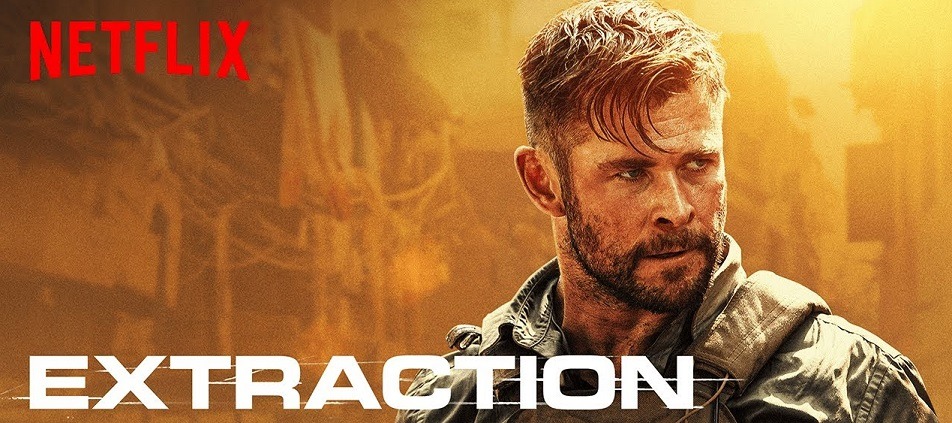
Extraction is a bit of a mini-Avengers reunion as it is written and produced by Joe Russo (one of the directors of Winter Soldier, Civil War, Infinity War and Endgame), stars Chris Hemsworth (Thor himself), and is directed by Sam Hargrave (stunt-man in the Avengers films).  The premise is fairly straightforward – A group of mercenaries are tasked with rescuing the kidnapped son of a big Indian crime lord but when the mission goes south and the boy becomes expendable, Tyler Rake (played by Hemsworth) has to choose: to protect or to ditch the boy.

Positives

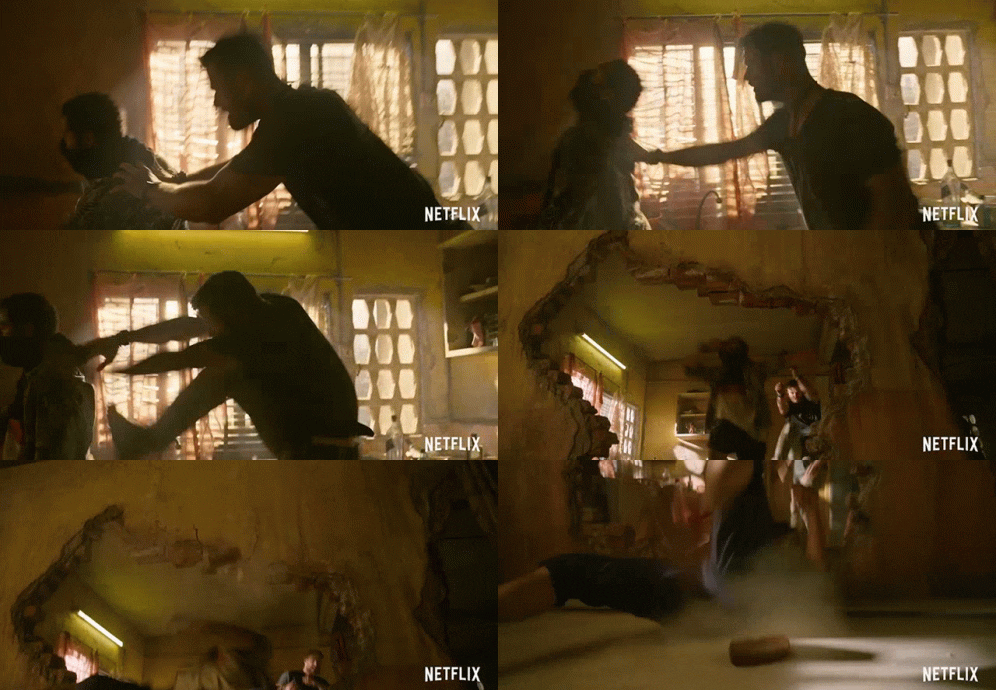
At the risk of stating the obvious, Extraction has some of the best action sequences I have seen in a while, ever since the first John Wick film. Just like that Keanu-led franchise, this movie is also directed by a stunt-coordinator, which is showcased in the fight scenes. The action is brutal, visceral, and is extremely well-choreographed. Rather than relying on shaky-cam or quick cuts, the filmmakers let the action scenes breathe and use a variety of action (car chases, gunfights, knife-fights, etc.) to keep it from getting stale. In fact, there is one 12-minute long-take, which had me at the edge of my seat!

giphy

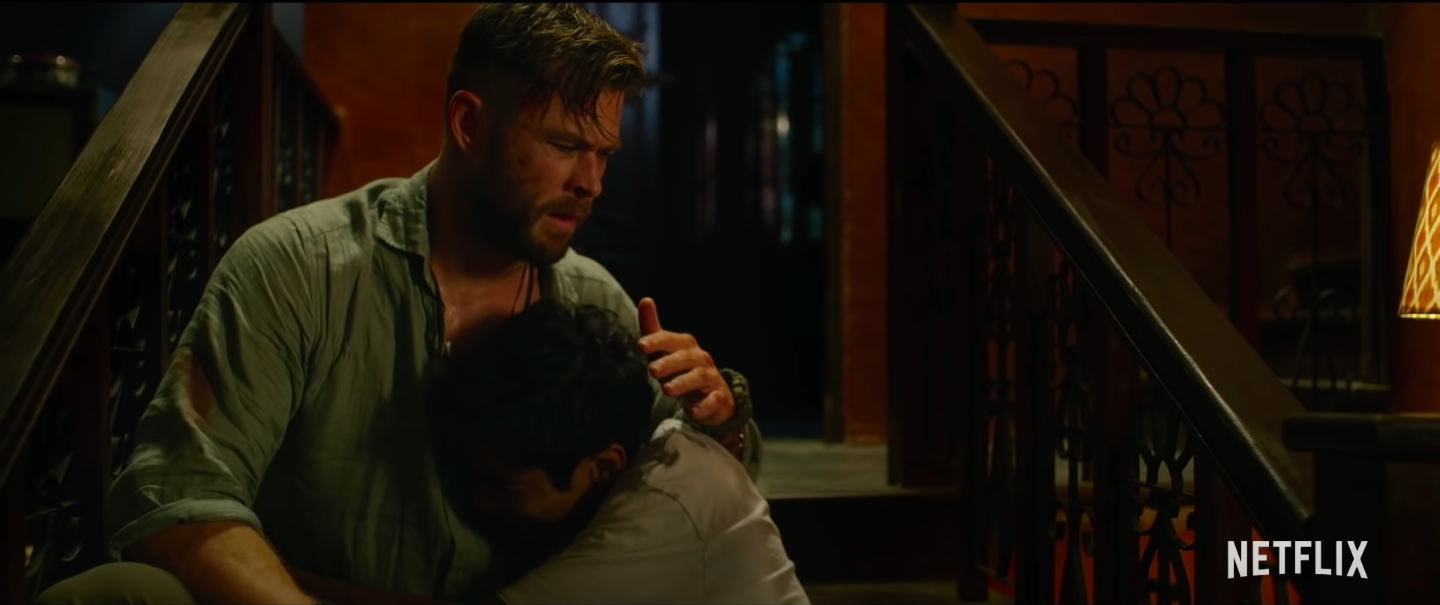
Action aside, this movie also has solid performances, especially from one Chris Hemsworth. He sells the film’s action convincingly but also does a really job in the one-on-one character moments. Tyler has a very traumatic past, as he lost his 6-year old son to lymphoma, and ends up seeing Ovi (the kidnapped kid) as his surrogate son. Speaking of the kid, played well by newcomer Rudhraksh Jaiswal, he has some good back-and-forth with Tyler and ends up being more than a lad-in-distress (male version of damsel-in-distress?). David Harbour has an extended cameo and he delivers as usual. Lastly, one of the more humanized characters in the film ends up being this elite Special Forces-type assassin figure, Saju. Initially, he’s presented as an antagonistic figure and has questionable motivations but the movie, thankfully, delves deeper into his backstory and makes him a sympathetic character.

Extraction---Film-Still

Courtesy of Netflix, AGBO, Thematic Entertainment, India Take One Productions, and T.G.I.M. Films

Negatives

Don’t expect anything Shakespearean from a movie called ‘Extraction.’ The plot is pretty thin and is pretty predictable. Not to mention, the backstories provided feel obligated to appeal to those who want some semblance of a story rather than 100% action. As mentioned before, we learn that Tyler suffered a terrible loss and has been on a suicidal mission ever since. Ovi, the son of the Indian drug lord, talks about his dad and how uncomfortable it gets to, for example, have dinner with him, knowing that his dad kills people. However, the movie just glosses over the duo’s lives to get to the destruction and mayhem, which feels a little disappointing, as they had the set-up to explore these characters more and become more than a mindless action film. Tyler’s popping-pills-and-drinking-alcohol persona is one of the few scenes we get of him suffering from PTSD and as we all know by now, those are absolutely some of the biggest cliches for a hardened-action movie hero.

In addition, the inevitable bond between Tyler and Ovi needed more fleshing out. The pair only have a couple of conversations before a hardened-mercenary like Tyler decides to save the boy at all costs. 

Screen Shot 2020-04-25 at 12.23.35 PM.png

Courtesy of Netflix, AGBO, Thematic Entertainment, India Take One Productions, and T.G.I.M. Films

Rating – Solid Recommendation

Extraction doesn’t redefine the action movie genre by any stretch of the imagination. The story is boilerplate and is riddled with the genre cliches but more importantly, it delivers on its promise. It has terrific action and just enough character work to make me care for these characters. If you got a couple of hours to kill, I recommend checking out Extraction!

extraction-netflix-chris-hemsworth-poster-full