AT&T’s WarnerMedia + Discovery Merger – Does it make sense?

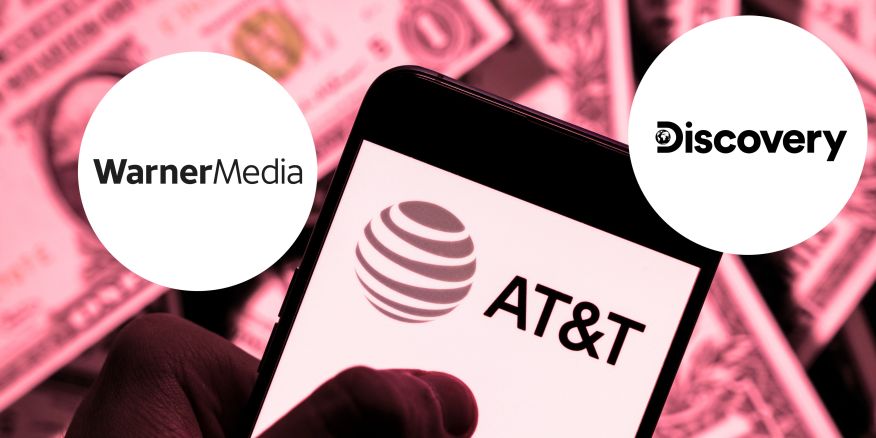
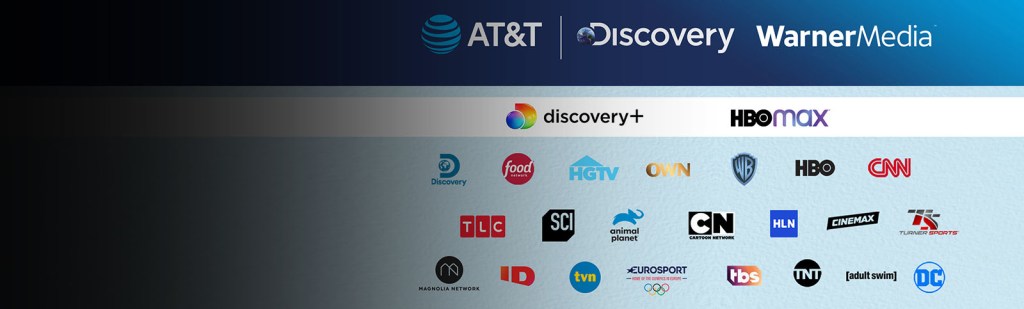
In 2018, AT&T’s (T) acquisition of Time Warner was finally approved by various governmental agencies for a whopping sum of $85.4 billion. Essentially, AT&T wanted to use its wireless and broadband services to deliver high-quality content (Time Warner-owned CNN, TNT, WB’s film & TV slate, HBO, etc.) to its consumers. 3 years later, however, AT&T is now planning to sell its entire WarnerMedia division to Discovery for a sum of $43 billion, through “a combination of cash, debt securities, and WarnerMedia’s retention of certain debt.” The deal would merge WarnerMedia and Discovery’s streaming services, making the ‘merged’ company worth roughly $150 billion, including debt. In addition, AT&T shareholders would receive a 71% stake in the new company while Discovery shareholders would receive a 29% stake.
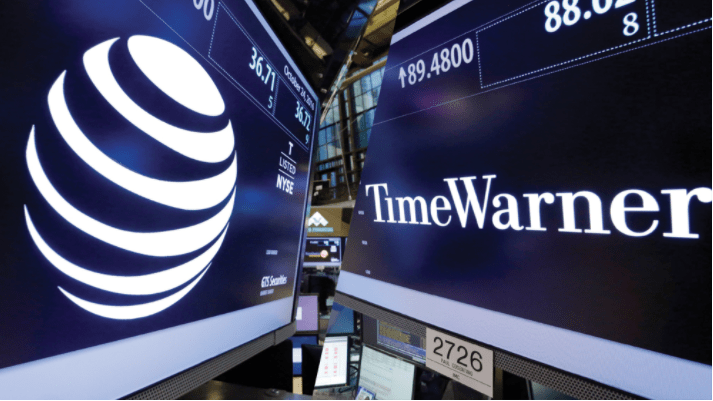
Courtesy of Variety

That said, the question becomes – Why is AT&T selling WarnerMedia for a loss of $42.4 billion? After all, WarnerMedia has a plethora of lucrative assets, from its news division (CNN) to WB’s film & TV franchises like DC Comics, Harry Potter, etc. On paper, the idea of a cable and wireless company like AT&T leveraging its broadband services to serve customers with media content makes sense. In reality, however, the acquisition has been a disaster for AT&T and its shareholders, while also stretching its resources thin. Even Wall Street was against this deal, with the company seeing its stock price drop more than 20% since 2018.

Thanks to its pricey acquisitions of DirecTv for $48 billion or 67.1 billion with debt, and aforementioned Time Warner for $85.4 billion, AT&T has become saddled with over $180 billion in short-term and long-term debt, making it one of the most indebted companies in the world. In a crowded wireless space, which is its core business after all, AT&T is in need of a lot of capital to expand its current 5G infrastructure to compete against companies like Verizon (VZ), Comcast (CMCSA), and T-Mobile/Sprint (TMUS). A few months ago, the Federal Communications Commissions (FCC) held a massive 5G airwave auction, where Verizon, AT&T, and T-Mobile spent over $45.4 billion, $23.4 billion, and $9.3 billion respectively to acquire “C-band spectrum.” Without going on a tangent about the auction itself and the 5G and broadband network, the fact of the matter is that it is very expensive to upgrade the current infrastructure to deliver a high-speed 5G connection. In fact, AT&T ended up further increasing its debt-load by borrowing $14 billion to pay for the auction, which is becoming very unsustainable. AT&T is essentially fighting behemoths on multiple fronts (in telecommunication and in entertainment) with very limited capital and is trailing in both. As Ron Swanson famously said, “Never half-ass two things”…

Speaking of, while half of the company’s focus was on 5G infrastructure, the other half was set on rolling out the company’s flagship streaming service, HBO Max, in the hopes of taking on Netflix, Disney, Amazon, etc. Despite spending billions of dollars on original content for both HBO and HBO Max, the results have been disappointing, to say the least. By the way, I do have to express my befuddlement at the marketing of HBO Max, as the company failed to effectively distinguish between its 4 services – HBO, HBO Go, HBO Now, and HBO Max. As someone who follows the entertainment and business world closely, even I was confused at the difference between the aforementioned services… Apologize for the tangent but, this marketing blunder proved to me why a merger & acquisition (M&A) of companies in 2 completely different industries is not a good idea. Okay, back to subscriber growth, or lack thereof in the case of HBO Max. In terms of subscribers, AT&T reported that HBO & HBO Max added roughly 2.7 million subscribers domestically in the last quarter, with a current tally of just 44.1 millions HBO and HBO Max subscribers domestically and roughly 64 million subscribers globally. The bump in new subscriptions was much lower than expected, despite having HBO Max-exclusive releases like Zack Snyder’s Justice League and day-and-date releases for big movies like Godzilla vs. Kong, Mortal Kombat, Wonder Woman 1984, etc.. On the other hand, many streaming services reported solid subscriber growth while not having to raise their subscription cost a whole lot. Here is the subscriber number for the other streaming services – Netflix (NFLX) currently has over 207 million subscribers, Disney (DIS) currently has roughly 160 million subscribers (Disney+ has 103.6 million subscribers, Hulu has 41.6 million subscribers and ESPN+ has 13.8 million subscribers), Amazon (AMZN) Prime currently has over 200 million subscribers, Comcast’s Peacock currently has over 42 million subscribers, Discovery+ has over 15 million subscribers, ViacomCBS’s Paramount+ currently has over 30 million subscribers, and Apple+ *is estimated* to have roughly 40 million subscribers based on third-party data. The competition is clearly heating up in the streaming service space and ultimately, consumers will only have the money to sign up for a couple of services, which has arguably left some services in the dust already (ie. Quibi). By merging WarnerMedia and Discovery, HBO Max and Discovery can offer more content for a reasonably priced subscription cost between $7/month and $15/month, making it a better bargain for the consumer. Considering Discovery+ is best known for its educational content (Discovery Channel, Animal Planet, etc.), and HBO Max is best known for its adult-oriented fictional content, an amalgamation of the 2 would have a four-quadrant appeal and would most definitely help expand its viewer base.

By merging the 2 entertainment companies, who have a similar entertainment-oriented vision anyways, the end result would be better for the consumer, while also allowing AT&T to use the $43 billion to focus on its core business of 5G network and fiber network expansion.
3 ways to improve Netflix

In the last earnings call, Netflix executives warned investors that the company expects its future subscriber growth to drop, especially as “Covid and social restrictions end.” Not to mention, more streaming services have joined the fray, meaning Netflix now faces significantly higher competition than ever before, which has prompted the company to double down on their original content. In 2020, Netflix planned to spend “$17.3 billion” on their original content, “a $2 billion increase from 2019.” Spending such exorbitant amounts of money requires the ability to raise capital and rather than raising money through equity (offering more stocks), Netflix decided to borrow money. Currently, the streaming giant has $726 million in short-term debt and a whopping $17 billion in long-term debt. Their debt-to-asset ratio, which indicates the percentage of assets financed by (short-term and long-term) debts is at a staggering 47%. Their debt-to-equity ratio, which is measured by dividing the total liabilities by the shareholders’ equity, is at 298%! Generally speaking, a lower debt-to-asset ratio and debt-to-equity ratio is better because it involves less risk. Even though this isn’t as big of a problem right now, Netflix absolutely needs to take this into consideration for their overall streaming strategy.

That being said, I believe that Netflix can do 3 things to alleviate some of the inevitable financial stress and further solidify its #1 ranking in the streaming arena.

Marketing / Quality vs Quantity

One of Netflix’s defining ‘qualities’ is that it releases all of its episodes at once, as opposed to dropping it weekly like traditional cable or other streaming services. Say what you will about HBO Max’s launch, there’s no denying that HBO is easily the best streaming service, in terms of quality. In the last number of years, HBO Originals have repeatedly swept the Emmy’s and generally receive better critical reception than their rivals. Netflix’s strategy, on the other hand, is to completely bombard its subscribers with so much content, often times lackluster, that they completely forget to even market them. In the last 2 months, we’ve had big Netflix original shows like Lucifer Season 5, Ratched Season 1, Umbrella Academy S2, Away S1, etc. In terms of original movies, Netflix recently gave us Enola Holmes, Project Power, The Devil All The Time, etc. However, do you still hear anyone talking about these shows/movies? Or even better (or worse), did you first hear about these shows through marketing or by aimlessly scrolling through Netflix? Chances are, it’s the latter. It’s fair to say that Netflix is absolutely abysmal at marketing its content and one reason for this is because they have TOO MUCH content. Unlike an HBO or Disney+ or even an Apple+ that is focused on putting out quality content and marketing their content to get the maximum eyeballs, Netflix has chosen to just drown its viewers with content and simply doesn’t have as much money allocated to promote them. This also explains why Netflix has been known to ending popular shows after a couple of seasons. Just recently, Netflix cancelled Glow, The Chilling Adventures of Sabrina, Altered Carbon, etc. If people don’t know that there’s a new season coming out, how does Netflix expect them to watch it? Frankly, I do not get the rationale to greenlight a gazillion shows if Netflix isn’t going to take the time to even market them properly… @Netflix, focus on promoting the content and spend more time on the quality of the content itself!!

PS – This SNL skit perfectly sums up Netflix’s current strategy

Courtesy of The New York Times

Introduce a free, ad-supported tier

This is a no-brainer. One way Netflix can see a big boost in their subscriber count is by releasing a free but ad-supported tier, similar to NBCUniversal’s Peacock. Of course, they can choose to offer limited content on this particular tier and drop weekly episodes as opposed to dropping them all-at-once if need be, but the strategy is quite sound. This will most definitely help them see a boost in the number of subscribers AND more importantly, allow them to recoup some of the expenses through advertisements, as one Steve Burke, a former NBCUniversal executive explains for Peacock. According to Burke, “Former NBCUniversal Chairman Steve Burke said last year he expects Peacock can make about $5 per month for every free Peacock subscriber in advertising revenue.” If Netflix were to offer a free tier, a lot of previous Netflix users will undoubtedly come back to the service, simply due to the amount of (four-quadrant) content available on the platform. Currently, the cheapest Netflix plan is $9/month, higher than Disney+, Apple+, and Peacock. However, Netflix is obviously the biggest streaming platform in the world and will likely be able to demand significantly higher in advertising fees than a newbie like Peacock. As more people “subscribe” to Netflix, the company will have higher leverage, which will likely translate to more revenue for the company. That being said, there is a risk of losing current, paying subscribers to the free tier instead. However, Netflix can entice these customers to stick to the paid plans by offering more content, especially in HD or 4K, allowing users to download and watch movies offline, etc. These are the benefits that the free tier won’t have, for obvious reasons. Besides, the “turnover” rate and “revenue lost” will be minuscule to the advertising revenue generated from the free tier.

Release weekly episodes

This is likely to be the most controversial suggestion but based purely on the research and data, I believe Netflix (and us, the viewers) will most definitely benefit from this strategy. For starters, releasing weekly episodes has shown to generate more buzz, translating to higher viewership, than Netflix’s drop-it-all-at-once strategy. Recently, Amazon switched their prior model and decided to drop weekly episodes of The Boys season 2, as opposed to dropping them all at once for Season 1. The result? Double the viewership. How about The Mandalorian or Game of Thrones? These shows wouldn’t have been anywhere as big as they are/were if studios dropped the entire season at once. Releasing one episode a week gives viewers the time to speculate and buzz about the show for an entire week! By dropping weekly episodes, the buzz only goes up and if the shows are any good, more people join the ‘bandwagon’ because of the word-of-the-mouth. As we all know, people like being a part of the cultural zeitgeist and releasing weekly episodes makes the show feel like an “event.” As I alluded to before, there is very little buzz, if any, for a Netflix show after a week or 2 of its release. This is also true for high-profile Netflix shows like Stranger Things, The Witcher, Daredevil, etc. Once people watch the entire season, the buzz dissipates and viewers naturally move on to other shows. As we’ve seen from HBO or Disney+ shows, subscribers will continue to pay if they like a particular show. Another benefit of weekly episodes is that Netflix will then no longer need to spend billions of dollars on shows that would likely have been ignored anyways.

Courtesy of RLC Media

As I mentioned before, releasing weekly episodes is also good for the viewers. There have been detailed studies on the negative impact of binge-watching on one’s health, but my argument will solely be based on the ‘cultural’ impact. When Netflix dumps the entire season at once, interested viewers are compelled to binge the show to avoid spoilers. Often times, that’s 10+ hours of time commitment in one weekend, which a lot of people are unable to commit to for a plethora of reasons. If no one talks about the show after a week, viewers might be inclined to skip the show all together, which explains why a majority of Netflix shows don’t gain significant viewership. People want to be a part of the conversation!

Look, I totally understand that this suggestion is very disruptive and if enacted, will anger a lot of current subscribers. However, the company can always find a “middle-ground” of sorts. For certain low-profile shows like Ratched, Glow, etc., it’s perfectly fine if Netflix chooses to dump the entire season at once to satiate the appetite of binge-watchers. However, for their ‘tentpole’ shows like Stranger Things, The Witcher, House of Cards, why not release an episode, or even a couple of episodes, weekly? The conversation/buzz will go on for weeks and will make these shows more of an “event.” This model has been proven to be more successful than Netflix’s current strategy, hence why more streaming services chose this route for their platforms.

Conclusion

Based on the sheer amount of debt the company owes and lack of buzz with a majority of their content, I believe that Netflix should – focus on marketing its content and emphasizing quality over quantity, offer a free, ad-supported plan, and lastly, switch to weekly episodes. Again, all of these suggestions are intertwined. Netflix will not be compelled to bombard its viewers with so much original content if they released weekly episodes for their popular shows. If viewers do enjoy this show, they will continue to pay for the service. This will save the company billions of dollars in original programming, which can also better be used to promote the content itself and get higher viewership. Offering a free, ad-supported tier will only lead to more subscribers and open a new source of revenue for the company. I believe if Netflix does decide to adopt these suggestions, they will most definitely be in a better financial condition and continue to remain the cream of the crop! As the Hulk joked in Avengers: Endgame, “I see this as an absolute win!”

All the major streaming services (content, pricing, etc.)

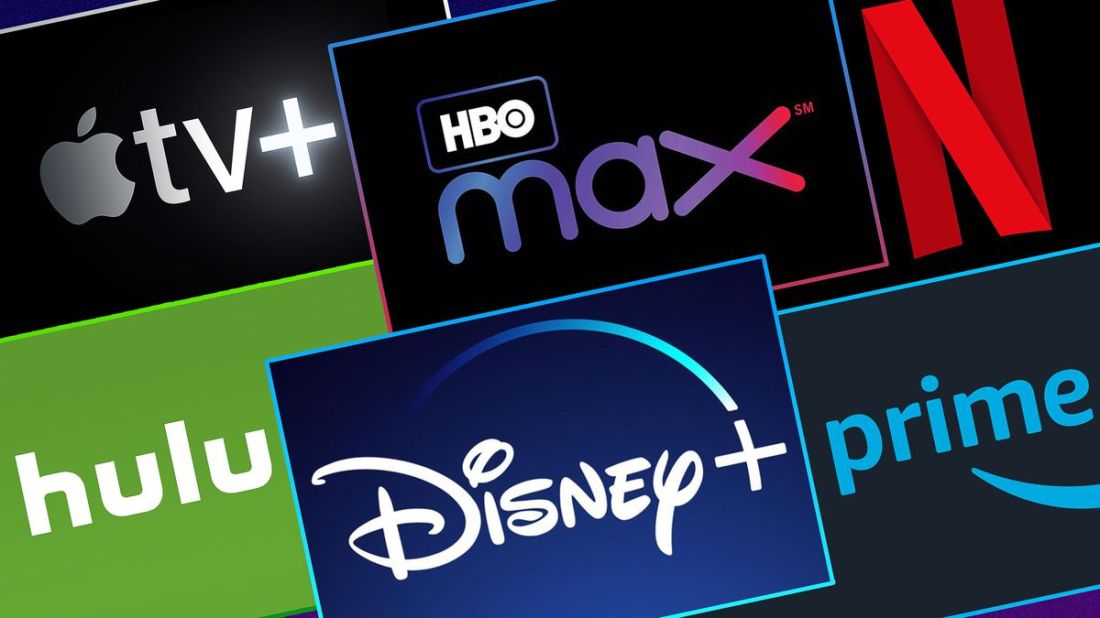
Covid-19 has kept us apart from our families, friends, relatives, but one of the few sources of comfort to ‘cure’ our loneliness are the seemingly-countless streaming services. As more and more people cut cable, more streaming services seem to be popping up. Netflix started out as a DVD rental company in 1997, with streaming only being introduced a decade later. Now, they are primarily known as a streaming service provider and have inspired dozens of companies to provide their own services as well. With HBO Max and NBC-Universal’s Peacock launching very soon, I think it’s a perfect time to list all the major streaming services that are/will be available for our consumption.

  1. Netflix – Easily the most popular streaming service out there, Netflix currently boasts of 180+ million subscribers, with a recent surge in subscribers thanks to the quarantine measures. The service has 3 pricing plans – $8.99/month, $12.99/month, $15.99/month. In terms of what content Netflix has, the real question is “what don’t they have?” They’ve borrowed a lot of money to fund their original programming, which includes heavyweights like Stranger Things, The Witcher, House of Cards, etc. More importantly, Netflix is arguably the only service that has something for everyone, which has worked wonders for them.
  2. Amazon Prime Video – Prime Video is one of the many perks of having an Amazon Prime membership, which costs $12.99/month and $6.99/month for students. And, Prime Video has some of the best streaming content available, including original series like the acclaimed The Marvelous Mrs. Maisel, Jack Ryan, and original movies like The Report, Late Night, etc. Fun fact – many college students get 6-months of free Amazon Prime using their .edu email ID’s!
  3. Hulu – Hulu is one of the most affordable AND one of the better streaming services available. The service costs $5.99/month with ads and $11.99/month without ads. In terms of content, Hulu has popular shows like ‘Rick and Morty’, ‘Killing Eve’, ‘The Handmaid’s Tale’ etc. In addition, Disney (currently a 2/3rds owner) is offering a $12.99/month bundle for Disney+, Hulu, and ESPN+, which is a terrific deal!
  4. Apple TV+ – After realizing that the streaming service model can be profitable, Apple decided to jump in the game, with the launch of Apple TV+. Even though Apple+ doesn’t have a lot of IP-driven content, it costs a measly $4.99/month and has critically-acclaimed shows like ‘The Morning Show’, ‘Defending Jacob’ and original movies like Samuel Jackson-Anthony Mackie’s ‘The Banker’, etc. PS – you can get one year of free Apple+ if you’ve purchased an Apple product after September 2019!
  5. Disney+ – The major appeal of Disney+ is the family-friendly content. On top of that, Disney owns some of the biggest Hollywood franchises (Marvel Studios, Star Wars, Pixar) and recently acquired 20th Century Fox’s assets (X-Men, Avatar, Simpsons) to boost their D+ content. This service currently costs $6.99/month and has most (not all because of existing deals) of the Marvel movies, the Star Wars films and 100’s of Disney toons. Fun fact, current Verizon Unlimited customers can get one year of free Disney+, so win-win! In terms of content, one criticism levied against D+ is the lack of high-profile new content, which Disney will soon rectify with the launch of Falcon & Winter Soldier, Mandalorian season 2, and WandaVision this year! And, they have more Marvel shows (Loki, Ms. Marvel, She-Hulk, etc.) and Star Wars shows (Obi-Wan, Rogue One’s Cassian Andor) in production!
  6. CBS All Access – CBS All Access is arguably the least-buzzy of the big streaming services, as there isn’t a whole lot of appealing content. Aside from the Star Trek shows (Picard, Discovery), The Twilight Zone, CBS All Access simply doesn’t have the content that justifies paying for this service. However, the service has 2 pricing plans – $5.99/month (with limited ads) and $9.99/month (no ads).
  7. HBO Max – HBO Max is essentially a derivative of the existing HBO Now (streaming service) and HBO Go (cable service for DirecTV & Spectrum customers) and will launch on May 27. Max will cost $15/month and will feature the usual HBO content (Game of Thrones, Westworld). However, it is an upgrade from Now & Go in that there will original content (Justice League Dark, The Shining’s Overlook series) and licensed content like Friends, Southpark, The Big Bang Theory, etc., which the existing versions won’t have. I also suspect that WB will merge the DC streaming service into HBO Max. At least, that makes more sense…
  8. Peacock – Lastly, NBCUniversal’s Peacock has already launched for some Comcast customers but will launch for everyone else on July 15. Now, Peacock has 3 different price tiers –  $0 (limited content + ads), $4.99/month (with ads) and $9.99/month (no ads). In terms of content, Peacock will have all the Universal movies (Jurassic World, Fast & Furious), original content (a new Battlestar Galactica series) and more importantly, The Office and Parks & Recreation. As you may or may not know, Parks & Rec, and The Office will depart Netflix in October 2020 and January 2021 respectively!

PS – If you subscribe to every aforementioned service at the cheapest price, you’ll still be paying at least $50/month!!

Unless another major studio decides to launch their own streaming service, it looks like the majority of the competition will be among those 8 services. Of course, we have also have other lesser-known services like Quibi (will soon allow for TV viewing), Tubi (free, ad-supported), Shudder ($4.75/month for horror/supernatural content), Crackle (free, ad-supported), Showtime ($10.99/month), Starz ($8.99/month), YouTube TV ($49.99/month), AND more!! So don’t worry, you have plenty of content to keep you entertained!